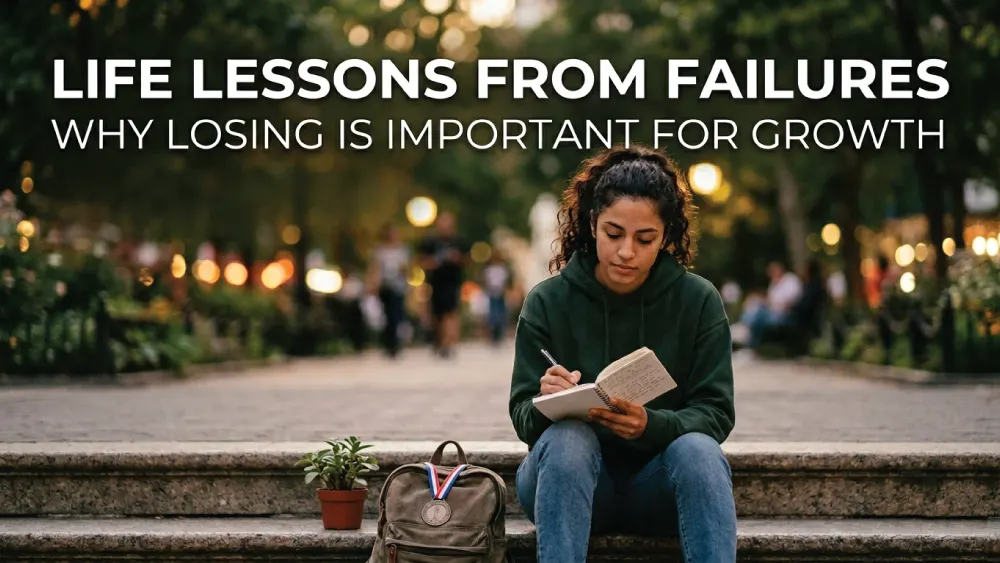
Failure is often seen as something to avoid at all costs. From a young age, we are conditioned to chase success, celebrate victories, and hide our losses. But what if failure is actually the most powerful tool for personal growth?
The truth is, failure is not the opposite of success-it is a crucial part of it. Every setback carries valuable lessons that shape your mindset, strengthen your character, and guide you toward long-term success.
In this ever-evolving journey of life, understanding the importance of losing can redefine how you approach challenges. At Inspire Rush, we believe that failure is not an end-it’s a beginning of transformation.
Why Failure is a Powerful Teacher
Failure teaches lessons that success often cannot. When things go right, we rarely stop to analyze why. But when we fail, we are forced to reflect, adapt, and improve.
Here’s why failure is such a powerful teacher:
- It reveals your weaknesses: Failure exposes gaps in your knowledge, skills, or approach.
- It builds resilience: Facing setbacks strengthens your ability to handle future challenges.
- It encourages self-awareness: You learn more about your emotions, reactions, and limits.
- It pushes you out of comfort zones: Growth only happens when you stretch beyond what feels safe.
Failure forces you to confront reality, and in doing so, it opens the door to real improvement.
The Hidden Benefits of Losing
While losing may feel painful in the moment, it offers long-term advantages that are often overlooked.
1. Builds Mental Strength
Every time you recover from failure, you become mentally tougher. You learn to handle stress, disappointment, and uncertainty.
2. Enhances Problem-Solving Skills
Failure requires you to rethink strategies. This sharpens your ability to find creative solutions.
3. Increases Humility
Winning can sometimes lead to overconfidence. Losing keeps you grounded and open to learning.
4. Develops Patience
Success rarely happens overnight. Failure teaches you to trust the process and stay committed.
5. Strengthens Determination
Each setback can fuel your desire to try again, harder and smarter.
Life Lessons You Learn Only Through Failure
Some of life’s most valuable lessons can only be learned through losing.
1. Success is a Journey, Not a Destination
Failure reminds you that growth is continuous. There is no final point where learning stops.
2. Effort Matters More Than Outcome
You begin to value the process rather than just the result.
3. Fear is Temporary, Regret is Permanent
Failing teaches you that trying and losing is better than never trying at all.
4. Adaptability is Key
Rigid thinking leads to repeated failure. Flexibility leads to improvement.
5. Self-Belief is Built, Not Born
Confidence grows when you overcome failures, not when everything goes perfectly.
These ever-evolving life lessons shape your mindset and prepare you for bigger challenges ahead.
The Psychology Behind Growth Through Failure
From a psychological perspective, failure plays a crucial role in personal development.
Growth Mindset vs Fixed Mindset
People with a growth mindset see failure as an opportunity to learn. They believe abilities can be developed through effort.
On the other hand, those with a fixed mindset view failure as a reflection of their limitations.
Shifting from a fixed to a growth mindset can completely transform how you perceive losing.
Emotional Intelligence and Failure
Failure also improves emotional intelligence by helping you:
- Understand your emotions
- Manage frustration
- Develop empathy for others
These skills are essential for both personal and professional success.
How to Turn Failure into Success
Failure alone doesn’t guarantee growth-it’s how you respond to it that matters.
1. Accept Responsibility
Own your mistakes without blaming others. This is the first step toward improvement.
2. Analyze What Went Wrong
Break down the situation and identify specific reasons for failure.
3. Learn and Adapt
Use your insights to make better decisions in the future.
4. Stay Persistent
Consistency is key. Most successful people fail multiple times before achieving their goals.
5. Take Action Again
Don’t let failure stop you. Use it as fuel to move forward.
Real-Life Examples of Growth Through Failure
Throughout history, many successful individuals have faced repeated failures before achieving greatness.
- Entrepreneurs who faced multiple business losses before building successful companies
- Athletes who lost numerous competitions before winning championships
- Creators whose ideas were rejected before becoming widely accepted
Their journeys prove that failure is not a dead end-it’s a stepping stone.
Common Mistakes People Make After Failing
Failure can be constructive, but only if handled correctly. Here are some mistakes to avoid:
1. Giving Up Too Soon
Many people quit after their first failure, missing out on potential growth.
2. Taking Failure Personally
Failure is an event, not an identity. Don’t label yourself as a failure.
3. Ignoring Lessons
Repeating the same mistakes without learning leads to stagnation.
4. Comparing Yourself to Others
Everyone’s journey is different. Focus on your own progress.
5. Losing Confidence
Temporary setbacks should not define your self-worth.
How to Build a Failure-Proof Mindset
A strong mindset helps you handle failure with confidence and clarity.
1. Embrace Challenges
See challenges as opportunities to grow rather than obstacles.
2. Redefine Failure
View failure as feedback, not defeat.
3. Practice Self-Compassion
Be kind to yourself during difficult times.
4. Set Realistic Goals
Break big goals into smaller, achievable steps.
5. Stay Curious
Always look for lessons, even in the toughest situations.
At Inspire Rush, we encourage readers to adopt a mindset where failure is not feared but embraced as a powerful tool for growth.
Conclusion
Failure is not something to be ashamed of-it is something to be valued. Every loss carries a lesson, every setback builds strength, and every mistake brings you closer to success. In a world that constantly celebrates winning, it’s important to remember that losing plays an equally important role in shaping who you become. The most successful individuals are not those who never fail, but those who learn, adapt, and keep going despite failure.
So the next time you face a setback, don’t see it as the end. See it as the beginning of a stronger, wiser version of yourself.
FAQs
Why is failure important for personal growth?
Failure helps you learn from mistakes, build resilience, and improve your skills, making it essential for long-term growth.
How can I overcome fear of failure?
Start by changing your perspective-see failure as a learning opportunity rather than a negative outcome.
What is the biggest lesson failure teaches?
One of the biggest lessons is adaptability-learning to adjust your approach when things don’t go as planned.
Can failure actually lead to success?
Yes, failure often provides the insights and experience needed to achieve success later.
How do successful people deal with failure?
They analyze their mistakes, learn from them, and keep moving forward with determination.
Is it okay to fail multiple times?
Absolutely. Repeated failures often indicate persistence, which is a key trait of successful individuals.